
Compression Therapy in Upland, CA
Compression Therapy Near You
Persistent swelling can make your legs feel heavy, tight, or uncomfortable and may interfere with walking or standing. At Wound Care Center of So Cal, we provide compression therapy in Upland, CA, to help manage swelling, support venous circulation, and promote the healing of certain lower-leg wounds.
Compression must be selected carefully because the appropriate amount of pressure depends on your circulation and medical needs. If you are looking for compression therapy near you, our team can evaluate your lower limbs and recommend a suitable treatment plan.
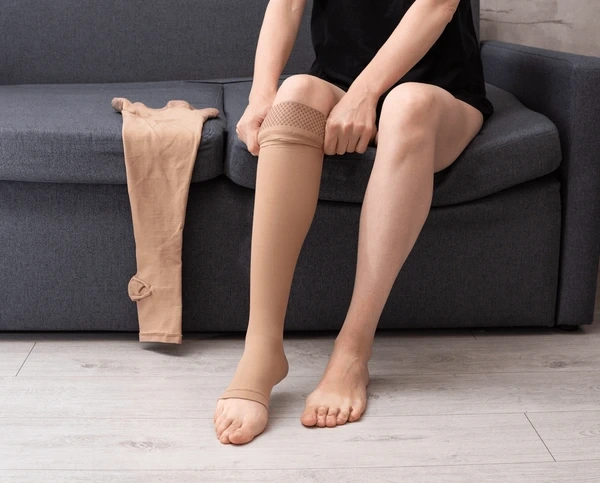
What Is Compression Therapy?
Compression therapy uses specially designed stockings, bandages, or wraps to apply controlled pressure to the legs. This pressure supports the return of blood through the veins and helps prevent excess fluid from collecting in the surrounding tissues. It is commonly used to manage venous swelling and certain lower-leg ulcers.
Compression is not appropriate for every circulation problem. Blood flow should be assessed before treatment, particularly when arterial disease is suspected.
If you are looking for a podiatrist near you for compression therapy, our team can examine your legs, assess the affected area, and determine whether compression is safe and suitable for you.
When Is Compression Therapy Needed?
Compression therapy may be recommended for:
Venous leg ulcers
These wounds develop when impaired venous circulation causes pressure and fluid buildup in the lower legs.
Chronic venous insufficiency
Weak or damaged vein valves can make it difficult for blood to return toward the heart.
Leg and ankle swelling
Fluid may accumulate after long periods of standing or because of an underlying venous condition.
Lymphedema
A buildup of lymphatic fluid can cause persistent swelling and tissue changes.
Varicose veins
Enlarged veins may contribute to aching, heaviness, and swelling.
Post-treatment swelling
Compression may be advised after certain procedures or injuries when medically appropriate.
Receiving compression therapy near you can make it easier to attend regular appointments and have your symptoms monitored over time.
Compression Therapy Options
The type of compression used depends on your circulation, swelling, wound condition, mobility, and ability to manage the garment at home. Options may include:
Compression stockings
Medical-grade stockings provide graduated pressure and are available in different strengths and lengths.
Compression bandages
Layered bandages can provide sustained pressure for swelling or venous wound management.
Adjustable compression wraps
Reusable wraps can be tightened or loosened to maintain an appropriate fit.
Intermittent pneumatic compression
An inflatable sleeve may apply and release pressure in cycles when recommended as part of a care plan.
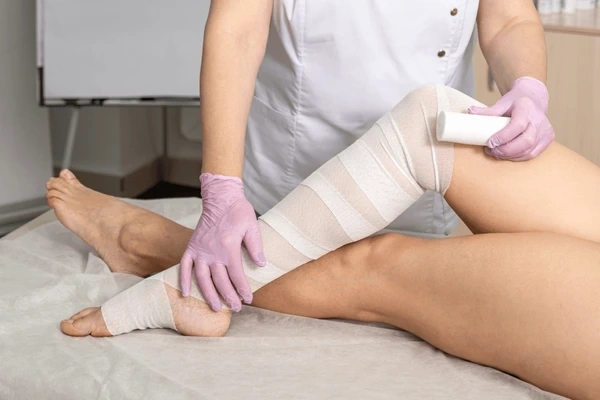
What Are the Benefits of Compression Therapy?
When it is safe and clinically appropriate, compression therapy may help:
Reduce swelling
Controlled pressure helps move excess fluid out of the lower legs.
Support venous circulation
Compression helps blood travel upward through the veins more efficiently.
Promote ulcer healing
Managing venous pressure can create a better environment for certain lower-leg wounds to heal.
Relieve leg heaviness
Reduced fluid buildup may ease aching, tightness, and fatigue.
Protect the skin
Controlling swelling may reduce tension and irritation in fragile skin.
Lower the risk of recurrence
Continued compression may help prevent some venous ulcers from returning after they heal.
If you are unsure whether compression therapy is suitable for your needs, visit our podiatrist in Upland, CA, for an examination.
What to Expect During Your Compression Therapy Visit
The correct pressure and garment must be chosen based on your circulation and symptoms. We usually follow these steps when providing compression therapy in Upland, CA:
Reviewing your medical history
We discuss your symptoms, health conditions, medications, and previous treatments.
Examining your lower limbs
We assess swelling, skin changes, wounds, tenderness, and other visible concerns.
Checking your circulation
We evaluate blood flow to determine whether compression can be used safely.
Selecting the compression method
We recommend a stocking, bandage, wrap, or other option based on your needs.
Measuring and fitting the garment
We take careful measurements to provide effective pressure without unnecessary discomfort.
Explaining home use
We show you how to apply, remove, clean, and monitor the compression garment.
Scheduling follow-up care
We check your progress and adjust the treatment plan when necessary.
Why Choose Wound Care Center of So Cal for Compression Therapy?
Compression therapy requires more than selecting a pair of stockings. At Wound Care Center of So Cal, we assess your circulation, symptoms, and wound-care needs before recommending treatment. When you choose our team for compression therapy near you, you can expect:
Careful circulation assessments
We evaluate blood flow before recommending a level of compression.
Personalized treatment plans
We select an option that suits your symptoms, mobility, and clinical needs.
Accurate garment fitting
We measure your legs carefully to help provide consistent and comfortable pressure.
Clear home-care instructions
We explain how to use and maintain your compression garment safely.
Ongoing progress checks
We monitor swelling, skin condition, and wound healing during follow-up visits.
Supportive clinical care
We listen to your concerns and make adjustments when the treatment does not feel right.
Schedule Your Compression Therapy Appointment
Ongoing swelling or a venous wound can become harder to manage without appropriate care. At Wound Care Center of So Cal, we offer compression therapy in Upland, CA, to help control fluid buildup, support venous circulation, and improve the healing environment for suitable wounds.
Our team can assess your symptoms and help you understand which treatment option may be appropriate. Call us at (909) 920-0884 to schedule an appointment.
FAQs
Should compression garments feel tight?
They should feel firm and supportive but should not cause pain, numbness, tingling, or a change in skin color. Contact our clinic if you experience any of these symptoms.
How long should I wear compression stockings each day?
The recommended schedule depends on your condition and the type of garment. Many are worn during the day and removed at night, but we will give you specific instructions.
Can I sleep while wearing compression garments?
Do not wear them overnight unless we specifically advise you to do so. Pressure needs can change when you are lying down.
How often should compression garments be replaced?
Many garments gradually lose elasticity with regular use and washing. Replacement timing varies, but we will help you determine when the garment is no longer providing adequate support.
How should I care for my compression garment?
Follow the washing and drying instructions provided with the garment. Proper care helps preserve its fit, elasticity, and effectiveness.