
Debridement (Removal of Dead Tissue) in Upland, CA
Debridement (Removal of Dead Tissue) Near You
A wound covered by unhealthy tissue may have difficulty progressing through the normal stages of healing. At Wound Care Center of So Cal, we provide debridement (removal of dead tissue) in Upland, CA, to clear nonviable tissue and help create a cleaner wound environment.
Regular wound care can be especially important when tissue continues to build up or the wound is not improving. If you are looking for debridement (removal of dead tissue) near you, our team can examine the area and determine whether this treatment is appropriate for your condition.
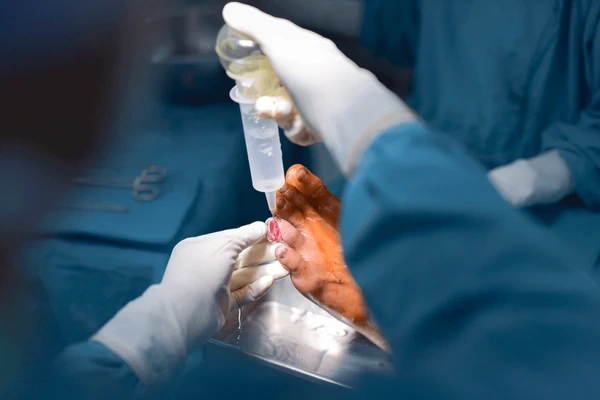
What Is Debridement (Removal of Dead Tissue)?
Debridement is the removal of dead, damaged, or infected tissue from a wound. This tissue can interfere with healing, hide the true depth of the wound, and make it harder to evaluate the healthy tissue underneath. Removing it may help the wound move forward through the healing process and allow dressings to work more effectively.
If you are looking for a podiatrist near you for debridement involving the foot, heel, or ankle, our team can assess the wound and recommend a suitable approach based on its condition and your overall health.
When Is Debridement (Removal of Dead Tissue) Needed?
Debridement may be recommended for:
Diabetic foot ulcers
Dead tissue may form when pressure, reduced sensation, or poor circulation delays healing.
Pressure ulcers
Tissue damage caused by prolonged pressure may require the removal of nonviable tissue.
Venous leg ulcers
Ongoing swelling and drainage can contribute to tissue breakdown within the wound.
Arterial ulcers
Reduced blood flow may lead to tissue loss and requires careful evaluation before treatment.
Non-healing surgical wounds
Tissue around an incision may need attention when healing does not progress as expected.
Wounds with slough or eschar
Yellow, tan, brown, or black tissue may cover part of the wound bed.
Receiving debridement (removal of dead tissue) near you can make it easier to attend follow-up visits and have the wound monitored regularly.
Debridement Treatment Options
The most suitable method depends on the wound, the amount of unhealthy tissue, circulation, comfort, and other health factors. Options may include:
Sharp debridement
Sterile instruments are used to remove clearly defined areas of nonviable tissue.
Mechanical debridement
Certain dressings or cleansing methods help loosen and remove damaged tissue.
Autolytic debridement
Moisture-retentive dressings support the body’s natural ability to break down dead tissue.
Enzymatic debridement
A prescribed topical agent may be used to dissolve specific types of nonviable tissue.
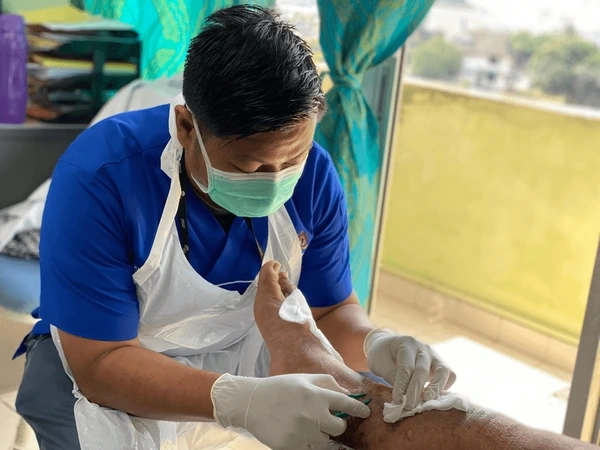
What Are the Benefits of Debridement (Removal of Dead Tissue)?
When clinically appropriate, debridement may help:
Expose healthier tissue
Removing dead tissue allows the wound bed to be evaluated more clearly.
Support wound healing
A cleaner wound environment may help healthy tissue develop.
Improve dressing contact
Dressings can reach the wound surface more effectively after obstructive tissue is removed.
Reduce trapped debris
Clearing damaged tissue helps remove material that may interfere with wound care.
Track progress accurately
The wound’s true size, depth, and condition become easier to monitor.
If you are unsure whether debridement is suitable for your needs, visit our podiatrist in Upland, CA, for an examination.
What to Expect During Your Debridement Visit
The procedure is tailored to the condition of the wound and the type of tissue present. We usually follow these steps when providing debridement (removal of dead tissue) in Upland, CA:
Reviewing your health history
We discuss your symptoms, medical conditions, medications, and previous wound treatments.
Examining the wound
We assess the tissue, drainage, depth, surrounding skin, sensation, and circulation.
Selecting the method
We choose an approach based on the wound’s needs and explain what the procedure involves.
Managing your comfort
We may use a local anesthetic or another comfort measure when appropriate.
Removing unhealthy tissue
We carefully clear nonviable tissue while protecting healthy areas.
Applying a dressing
We cover the wound and provide instructions for home care and follow-up.
Why Choose Wound Care Center of So Cal for Debridement (Removal of Dead Tissue)?
Debridement requires careful judgment because every wound is different. At Wound Care Center of So Cal, we evaluate the wound thoroughly and adjust care as healing progresses. When you choose our team for debridement (removal of dead tissue) near you, you can expect:
Detailed wound assessments
We examine the wound and the factors that may be delaying healing.
Individualized treatment plans
We select the debridement method according to your specific needs.
Gentle clinical care
We take steps to protect your comfort during the procedure.
Clear explanations
We discuss what we are doing and what you can expect afterward.
Consistent monitoring
We track changes in the wound and modify care when necessary.
Practical home-care guidance
We explain how to protect the wound between visits.
Schedule Your Debridement Appointment
Removing unhealthy tissue may be an important step when a wound has stopped improving. At Wound Care Center of So Cal, we offer debridement (removal of dead tissue) in Upland, CA, to support a cleaner wound bed and ongoing healing.
Our team can evaluate your wound, answer your questions, and explain the recommended next steps. Call us at (909) 920-0884 to schedule an appointment.
FAQs
Will I need more than one debridement session?
The number of sessions depends on how much nonviable tissue is present and how the wound responds. Some wounds need one procedure, while others require ongoing care.
Is debridement painful?
Comfort varies depending on the wound, tissue depth, and sensation in the area. We may use a local anesthetic or other measures when appropriate.
How should I care for the wound afterward?
Keep the dressing in place as directed, protect the area from pressure and friction, and follow the home-care instructions we provide.
Can I shower after the procedure?
Whether the wound can get wet depends on the dressing and treatment plan. We will explain how to bathe safely without disrupting the wound covering.
What changes should I report between visits?
Contact our clinic if you notice increasing redness, swelling, pain, drainage, odor, warmth, or other unexpected changes.